

 简体中文
简体中文 English
When a New Machine Arrives, People Gather
2026-05-18
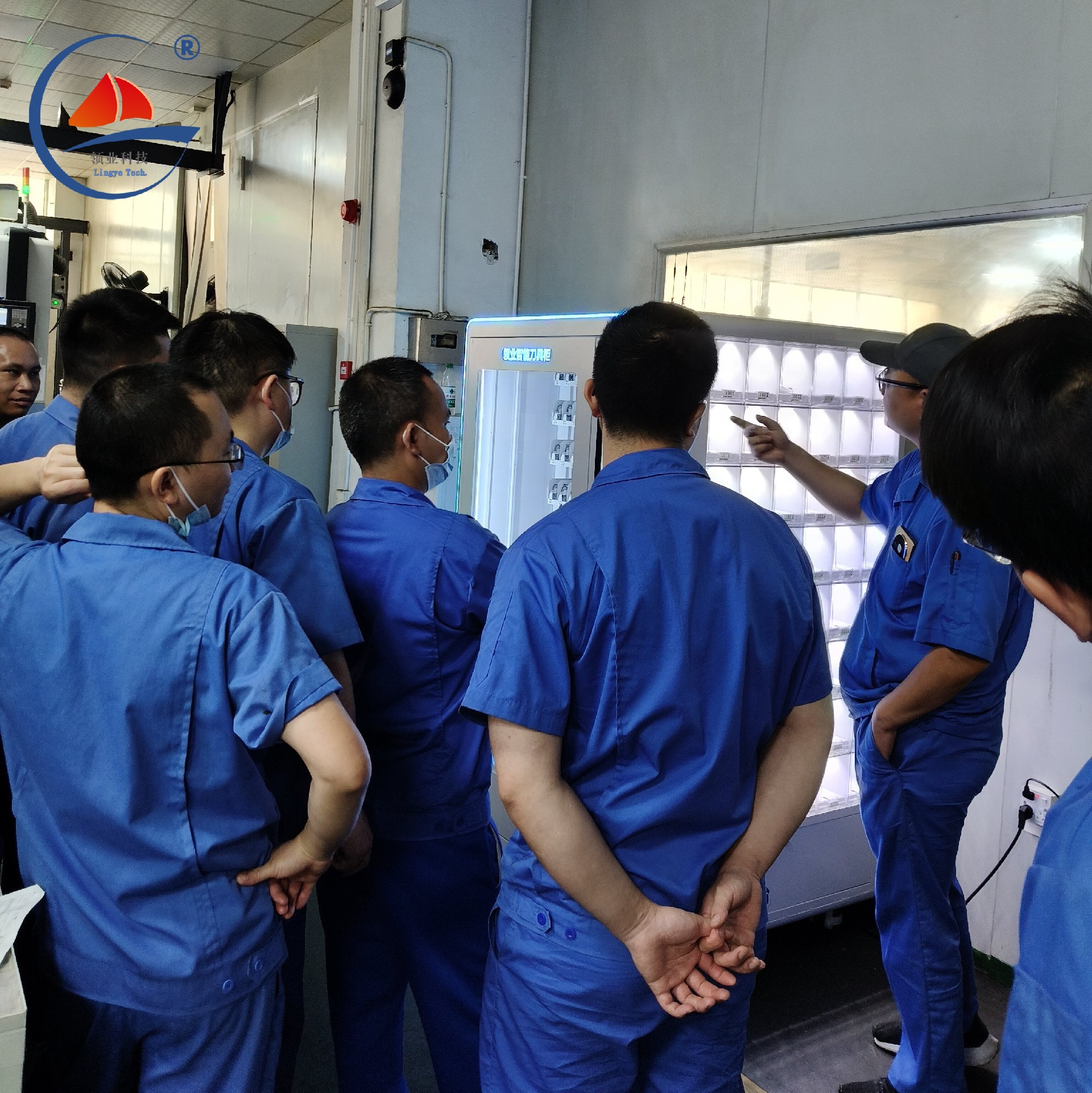
A few days ago, one of our after‑sales trainers sent me a photo. A brand‑new smart tool cabinet had just been delivered to a customer’s workshop. The forklift hadn’t even pulled away. Several operators and the production supervisor had already gathered around it. Some were touching the door. Others were inspecting the drawer slides. One was asking, “How does the card reader work?”
The trainer wrote a simple caption: “Every time a new machine arrives, someone always comes over to look.”
That picture stayed with me. Because how people react to new equipment tells you a lot about a shop’s culture.
Curiosity is a leading indicator
In some factories, when a new machine rolls in, people glance at it and go back to work. No questions. No curiosity. No one wants to learn. That usually means one of two things: either the equipment is so simple there’s nothing to learn, or the workers have learned that “machines are machines, and I am me” – learning doesn’t change anything.
But when people gather around, that’s different.
They want to know how the cabinet opens. How to check out a tool. Whether this thing will make their job easier. That “gathering” is driven by curiosity – and behind curiosity is the hope that a new tool can help them work better.
There’s an old saying in manufacturing: Workers don’t resist new equipment. They resist equipment that’s hard to learn, doesn’t help them, and creates extra work.
Why adopting new technology is more urgent than ever
A few years ago, adding a new piece of equipment was often “nice to have.” Better efficiency, lower waste – but not essential.
Today, the pressure is different. Customers want lower prices, shorter lead times, and higher quality. Competitors are cutting costs – if you stand still, your margin shrinks. Hiring is harder; young people don’t want dirty, repetitive jobs. You have to fill the gap with machines.
A customer once told me: “We used to run two shifts with a tool crib run by a veteran machinist. Last year he retired, and we couldn’t find a replacement. The night shift kept stopping because no one could find the right tools. Without a smart cabinet, the night shift simply couldn’t run.”
That’s not “digital transformation” as a buzzword. That’s a business necessity.
New tools don’t replace people – they help them
When some operators see new equipment, their first reaction is: “Is this going to monitor me?” or “Are they saying I’m too slow?”
That’s a natural defence.
But in every successful deployment we’ve seen, operators eventually say the same thing: “This actually helps.” Because the system takes over the boring, repetitive, error‑prone tasks – no more paper logs, no more digging through drawers, no more guessing what’s in stock.
People can focus on what matters: adjusting programs, checking quality, improving processes.
That operator who was curious about the cabinet? He later became the shop’s “cabinet lead” – training new people and troubleshooting small issues. He moved from being managed by the system to using the system to manage his own work.
When should you decide to bring in new technology?
If you see any of these signs in your workshop, it’s time to act:
Night shift efficiency is clearly lower than day shift because no one manages tool access
Veteran workers retire, and newcomers can’t keep up
Monthly tool spending is high, but no one knows where the money went
Operators spend too much time searching for tools or filling out forms
Customer audits keep asking for traceability records – and you struggle to provide them
None of these problems mean your people aren’t good. They mean the tools they have aren’t good enough.
The machine arrives, people gather – then what?Curiosity is only the first step.What really matters is what happens after installation: Is someone there to train them? Is support available when something goes wrong? Does the system actually save them time and effort?
A new technology’s success is 30% equipment and 70% implementation and culture.
If every time a new machine arrives, people gather – and those curious workers later become the ones who can use it, want to use it, and help others learn – then that factory is building a real competitive advantage.